Preparing for the NSCA Certified Personal Trainer (CPT) exam can feel overwhelming. With so many topics to review—exercise science, client assessment, program design, and nutrition—it’s easy to get lost. That’s why having the right NSCA CPT study materials is essential.
In this guide, we’ll walk you through the exam structure, the best ways to study, and how our 45 practice questions and answers can help you pass the NSCA CPT exam on your first attempt.
Why Use NSCA CPT Study Materials?

Quality study materials for the NSCA CPT exam provide several benefits:
Focused learning – Avoid wasting time on unnecessary topics.
Exam familiarity – Learn the exact question styles and difficulty levels.
Better retention – Reinforce theory with practice questions and scenarios.
Confidence boost – Simulate real exam conditions and reduce test anxiety.
NSCA CPT Exam Overview
Before diving into your study plan, it’s important to understand the exam format:
Number of Questions: 140 (100 scored + 40 unscored)
Format: Multiple-choice
Time Limit: 3 hours
Passing Score: 70%
Delivery Options: Pearson VUE testing centers
The exam covers 4 domains:
Client Consultation & Fitness Assessment
Program Planning & Exercise Technique
Safety, Emergency Procedures, & Legal Issues
Professional Responsibilities & Research Concepts
How to Study Effectively with NSCA CPT Materials
Here’s a structured plan to maximize your study time:
1. Start with the NSCA Textbook
Use the Essentials of Personal Training (NSCA) as your primary source. Highlight key concepts like energy systems, movement mechanics, and training principles.
2. Use Structured Study Guides
Organize your learning into weekly goals:
Weeks 1–2: Exercise science & anatomy.
Weeks 3–4: Assessment protocols & client screening.
Weeks 5–6: Program design & exercise technique.
Weeks 7–8: Professional practice & ethics.
3. Practice with Exam Questions
The most effective way to prepare is by solving practice questions. Our 45 NSCA CPT study questions (see end of this article) are designed to mirror real exam difficulty.
4. Review Weak Areas
Track your performance by domain. If you struggle with program design or biomechanics, revisit those sections in your textbook and guides.
5. Repeat with Timed Practice Tests
Take at least 3–5 full-length practice exams before your test date. This helps with pacing and stamina for the 3-hour exam.
Recommended NSCA CPT Study Materials
Here are the top resources for exam success:
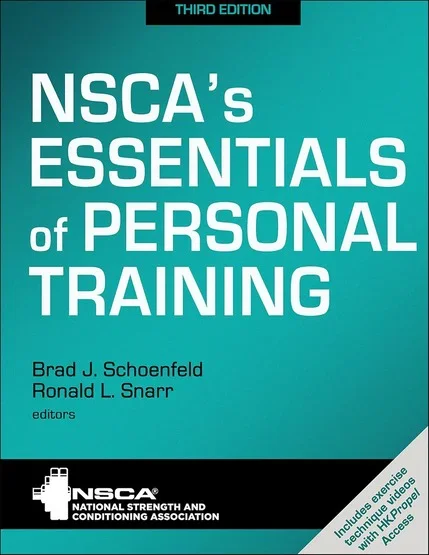
Essentials of Personal Training, NSCA (Textbook) – The official reference.
NSCA CPT Study Guide – Summarized key points for quick review.
NSCA CPT Practice Exams – Simulate real test conditions.
Flashcards & Apps (Quizlet, Anki) – Reinforce terms and concepts.
Our 45 NSCA CPT Practice Questions – Free questions to test your readiness.
Tips to Pass the NSCA CPT Exam
Study consistently – 1–2 hours daily beats cramming.
Take notes – Writing helps improve memory retention.
Focus on understanding concepts, not just memorizing facts.
Simulate the exam with practice tests.
Stay calm and well-rested before exam day.
Conclusion
The right NSCA CPT study materials can make the difference between passing and failing your certification exam. By combining the official NSCA textbook, structured study guides, and 45 practice questions and answers, you’ll be better prepared, more confident, and ready to earn your certification.
Scroll down to access the 45 NSCA CPT practice questions and start testing your knowledge today.
Frequently Asked Questions
- How to pass the NSCA CPT exam?
To pass the NSCA CPT exam, study consistently with the NSCA Essentials of Personal Training textbook, review all major domains, and practice with sample test questions. Simulating timed exams is one of the best ways to build confidence and improve performance.
- Is the NSCA CPT exam hard?
Yes, the NSCA CPT exam is considered challenging because it requires knowledge of anatomy, physiology, program design, assessments, and professional practices. However, with structured study and practice questions, many candidates pass on their first attempt.
- Is NSCA CPT a good certification?
Absolutely. The NSCA CPT certification is widely recognized in the fitness industry for its scientific and evidence-based approach. It’s NCCA-accredited, respected worldwide, and highly valued by employers looking for certified personal trainers.

NSCA's Essentials of Personal Training
by NSCA -National Strength & Conditioning Association
Developed by the National Strength and Conditioning Association (NSCA), NSCA’s Essentials of Personal Training, Third Edition With HKPropel Access, is the definitive reference for personal training professionals and students. This comprehensive guide to personal training, with contributions from leaders in the field, provides the most accurate and reliable information and guidance for current and aspiring professionals.
Test Your Knowledge
45 questions - NSCA-CPT
Instructions:
- • Answer all questions within the time limit
- • Questions will auto-advance after you select an answer
- • You can navigate between questions using the number buttons
- • Use the skip button if you're unsure
- • Review your answers before submitting
Comments (0)
Join the discussion! Share your thoughts and engage with other readers.
NSCA's Essentials of Personal Training
by NSCA -National Strength & Conditioning Association
Developed by the National Strength and Conditioning Association (NSCA), NSCA’s Essentials of Personal Training, Third Edition With HKPropel Access, is the definitive reference for personal training professionals and students. This comprehensive guide to personal training, with contributions from leaders in the field, provides the most accurate and reliable information and guidance for current and aspiring professionals.