An Overview of the NSCA Certified Personal Trainer Certification
The NSCA Certified Personal Trainer (NSCA CPT) is a prestigious credential accredited by the National Commission for Certifying Agencies (NCCA) and is widely recognized for its rigorous, science-based approach . Unlike certifications built on "bro science," the NSCA-CPT demonstrates your mastery of evidence-based principles, positioning you for top roles in commercial gyms, corporate wellness, and private practice . The exam is challenging, with a reported 66% pass rate for first-time test-takers, making dedicated preparation essential .
Eligibility requires you to be at least 18 years old, hold a high school diploma or equivalent, and possess a current CPR/AED certification . The exam costs $300 for NSCA members and $435 for non-members .
Why the NSCA-CPT & Its Official Textbook Build Top-Tier Trainers
Becoming a personal trainer is a popular path, but building a respectable, evidence-based career requires a different caliber of certification. In a field crowded with quick credentials, the NSCA-CPT (National Strength and Conditioning Association Certified Personal Trainer) stands apart as the choice for professionals who want to understand the "why" behind every exercise . It’s not just about knowing what to do, but knowing why it works and how to adapt it for any client.
This article dives into why this certification is a smart long-term investment for your career and how the NSCA's Essentials of Personal Training, 3rd Edition is your essential guide to mastering its depth.
More Than a Test: The NSCA-CPT Advantage
Think of the NSCA-CPT as less of a memorization test and more of a critical thinking assessment. Here’s what makes it different:
Built on Science, Not Trends: The NSCA pioneered evidence-based fitness credentials and was the first personal training certification to earn NCCA accreditation, the gold standard for professional certification . This means your credential is respected globally by clinics, top gyms, and athletic facilities.
Designed for Problem-Solvers: The exam tests your ability to analyze information and synthesize solutions for real-world client scenarios, not just recall facts . You'll be equipped to work with a wide range of clients, from general populations to those with special needs.
A Career and Earnings Booster: A previous independent survey revealed that NSCA-CPTs command the highest average salaries compared to other major certifications, making it a smart investment in your earning potential . It's often preferred or required for lead trainer, corporate wellness, and director-level roles.
The table below contrasts the NSCA-CPT's value proposition against typical "quick" certifications.
Feature | "Quick" Certifications | NSCA-CPT |
|---|---|---|
Foundation | Often generic protocols, anecdotal advice | Evidence-based, scientific principles |
Exam Focus | Memorization and recall | Application, analysis, and real-world problem-solving |
Career Outcome | Standard personal trainer roles | Higher earning potential, elite roles, specialization paths |
Perception | Common credential | Mark of excellence and expertise |
Your Blueprint for Success: The "Essentials of Personal Training" Textbook
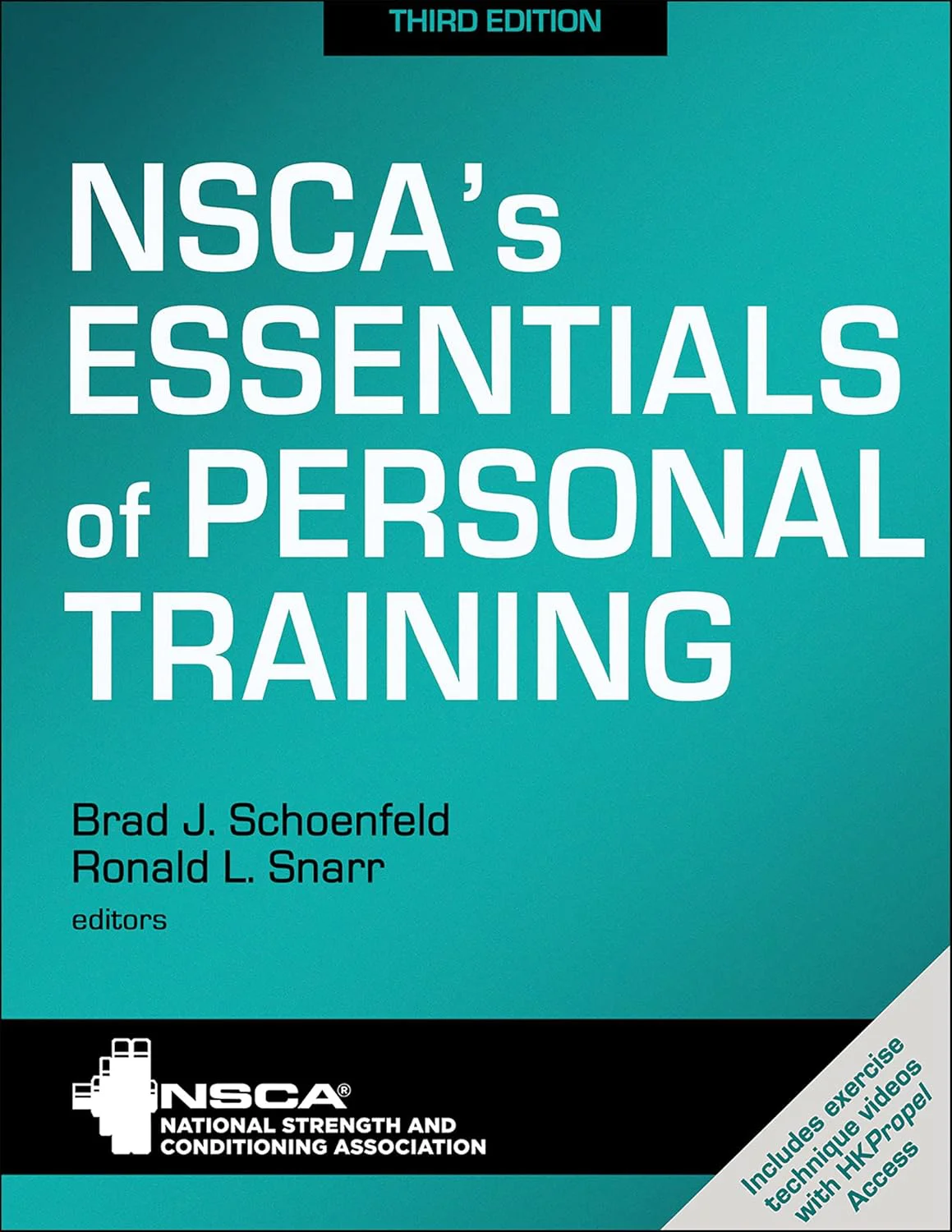
The NSCA's Essentials of Personal Training, 3rd Edition is the cornerstone of this learning journey. It's not just a recommended book; it's the comprehensive blueprint from which the exam is built.
This textbook provides the robust, scientific foundation required to pass the application-based NSCA-CPT exam . It covers all the knowledge, skills, and abilities required of a competent personal trainer, with clear explanations, practical examples, and in-depth discussions on everything from exercise science and client assessment to program design and professional practice .
Key areas covered include:
Integrated Assessment Strategies: Going beyond basic fitness testing to understand client readiness.
Program Design Principles: Creating tailored, effective, and safe workouts for diverse goals.
Scientific Foundations: Deep dives into anatomy, physiology, and biomechanics to inform your coaching.
Working with Special Populations: Adapting training for clients with specific needs and conditions.
❓ Test Your Readiness: Sample NSCA-Style Scenario
The NSCA exam is known for its scenario-based questions. Let's see how you do. This isn't just about the right answer, but the right reasoning.
Scenario: A new client, a 45-year-old male with a sedentary job, has a goal of "getting stronger." His health history questionnaire reveals no current injuries but notes a family history of cardiovascular disease. His blood pressure reading at your first session is 148/92 mmHg. During the movement assessment, you observe significant rounding of the upper back during the overhead squat.
What is the most appropriate and immediate course of action for the personal trainer?
A) Begin teaching him the barbell bench press to immediately work on his strength goal.
B) Design a linear periodization program focused on heavy compound lifts.
C) Have him obtain medical clearance from a physician before starting any exercise program.
D) Start with light cardio on a stationary bike to improve his aerobic base.
Answer with Explanation:
The Correct Answer is C.
A blood pressure reading at or above 140/90 mmHg is classified as hypertensive and is a major risk factor for cardiovascular disease . Given the client's family history and this reading, the most responsible and safe first step is to get medical clearance. This ensures it is safe for the client to exercise and falls within the trainer's legal and ethical responsibilities .
Why the Others Are Incorrect:
A & B both involve initiating strength training without addressing the significant health risk first. This is outside the trainer's scope of practice and could be dangerous.
D While light cardio may seem safe, proceeding with any structured exercise program without clearing the hypertensive risk is not the most immediate or appropriate action. Safety and risk stratification must always come first.
How to Truly Prepare for the "Thinker's Exam"
Passing the NSCA-CPT requires a shift from studying to understanding. Here’s how to use the textbook effectively:
Don't Just Read—Apply: As you go through the "Essentials of Personal Training" textbook, constantly ask yourself: "How would I use this with a real client?" Create hypothetical client profiles and design programs for them based on the concepts you're learning.
Master the Practice Test Loop: Use our 45-question free mock test as a diagnostic tool. Your score matters less than why you got questions wrong. Go back to the textbook for every incorrect answer and review that specific topic until you understand the underlying principle.
Think in Domains: The exam is split into four domains . Don't study them in isolation. See how "Client Consultation" directly impacts "Program Planning," and how "Exercise Techniques" are intertwined with "Safety." The official NSCA Certification Handbook provides a detailed content outline to guide your studies .
Test Your Knowledge with a 45-Question NSCA CPT Practice Test
To help you gauge your readiness, we have created a comprehensive free mock test featuring 45 free questions designed to mirror the style, content, and application-based nature of the actual NSCA CPT exam. This free questionnaire covers all four domains, providing a robust snapshot of your current knowledge.
This practice test will help you:
Experience the complex, scenario-based question formats used on the exam.
Identify specific content areas where you need further review.
Practice applying scientific principles to real-world client situations.
Build confidence in your test-taking abilities under time constraints.
Use your results to refine your study plan and focus your efforts on the domains where you need the most improvement.
Frequently Asked Questions
- I've heard the NSCA-CPT is one of the hardest. Is that true?
It's considered more challenging because it tests your ability to apply scientific knowledge to complex client situations, not just memorize facts. The first-time pass rate is about 66%, which reflects its rigorous standards . This is precisely why it's so highly valued.
- Is the "Essentials of Personal Training" textbook mandatory?
While not strictly mandatory, it is the official textbook for the exam and is considered the definitive resource . Given the exam's application-based nature, relying on this text is the most reliable way to ensure you are studying the correct, in-depth information.
- What's the best way to use practice tests?
Use them as a learning tool, not just a knowledge check. Take one early to identify weak areas. Then, after studying, take them under timed conditions to simulate the 3-hour exam. Most importantly, review every single answer explanation, especially for the questions you got right by guessing .

NSCA's Essentials of Personal Training
by NSCA -National Strength & Conditioning Association
Developed by the National Strength and Conditioning Association (NSCA), NSCA’s Essentials of Personal Training, Third Edition With HKPropel Access, is the definitive reference for personal training professionals and students. This comprehensive guide to personal training, with contributions from leaders in the field, provides the most accurate and reliable information and guidance for current and aspiring professionals.
Test Your Knowledge
45 questions - NSCA-CPT
Instructions:
- • Answer all questions within the time limit
- • Questions will auto-advance after you select an answer
- • You can navigate between questions using the number buttons
- • Use the skip button if you're unsure
- • Review your answers before submitting
Comments (0)
Join the discussion! Share your thoughts and engage with other readers.
NSCA's Essentials of Personal Training
by NSCA -National Strength & Conditioning Association
Developed by the National Strength and Conditioning Association (NSCA), NSCA’s Essentials of Personal Training, Third Edition With HKPropel Access, is the definitive reference for personal training professionals and students. This comprehensive guide to personal training, with contributions from leaders in the field, provides the most accurate and reliable information and guidance for current and aspiring professionals.