How to Get Your NSCA-CPT Certification: A Complete Beginner's Guide

Choosing to become an NSCA-Certified Personal Trainer (NSCA-CPT) means you're committing to a science-based, highly respected standard in the fitness industry. This credential, offered by the National Strength and Conditioning Association, is a mark of excellence that focuses on safety, assessment, and evidence-based practice.
If you're new to the process, it can seem complex. This guide breaks it down into simple, actionable steps, from registration to your first day as a certified professional.
Step 1: How to Register for the NSCA-CPT Exam
The NSCA process is slightly different from other organizations. The exam fee and study materials are sold separately.
Meet the Prerequisites: Before you can register, you must:
Be at least 18 years old.
Have a high school diploma or equivalent.
Hold a current CPR/AED certification from a nationally recognized provider.
Purchase Study Materials: Your first investment should be the official textbook, NSCA’s Essentials of Personal Training, 3rd Edition. This is the primary source for the exam content. You can buy it directly from the NSCA or Human Kinetics. Consider also getting the study guide and practice exams.
Become an NSCA Member (Highly Recommended): An NSCA membership costs about $130 per year, but it saves you money. The exam fee for members is $300, while for non-members it's $435. The membership instantly saves you $135 and includes other benefits like access to journals and a members-only Facebook study group.
Register for the Exam: Create an account on the NSCA website and complete the exam application. You will need to upload proof of your CPR/AED certification. Once your application is approved, you will receive an authorization to test email.
Schedule Your Exam: The NSCA uses Pearson VUE testing centers. Use the link in your authorization email to schedule your exam at a nearby testing center. You have one year from your application approval to schedule and take the exam.
Step 2: How to Study for the NSCA-CPT Exam
The NSCA-CPT exam is challenging and requires a solid understanding of both knowledge and application. Plan for 3 to 6 months of consistent study.
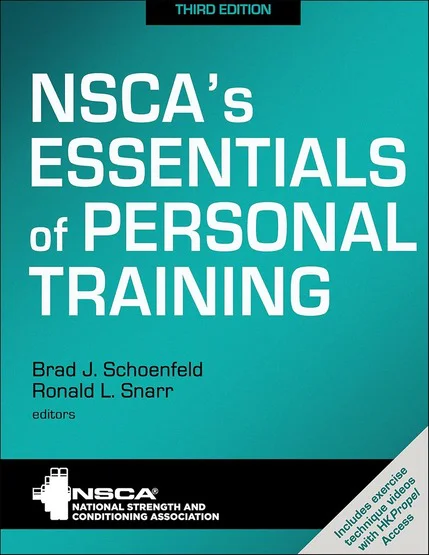
Your #1 Resource: The NSCA Essentials of Personal Training Textbook. This book is the blueprint for the exam. Read it thoroughly, cover to cover. Pay close attention to the domains of Client Consultation, Program Planning, and Exercise Technique.
Create a Study Schedule: Dedicate specific, consistent time each week. Break the textbook down into chapters and assign them to weeks on your calendar.
Use Active Learning Techniques:
Flashcards: Create flashcards for key terms, muscle functions, assessment protocols, and legal guidelines.
Practice Tests: Take the official NSCA practice exams. They are the best way to understand the question format and identify your weak areas.
Join the Community: The official NSCA CPT Exam Prep Group on Facebook is an invaluable resource. You can ask questions, discuss topics with moderators, and learn from other candidates.
Focus on Application: The exam includes video-based questions where you must identify correct and incorrect exercise form. Practice by watching exercise technique videos and critiquing form.
Step 3: What to Expect on Exam Day
Knowing the format will help you stay calm and focused.
The Exam Format: The exam is computer-based at a testing center. It consists of 155 multiple-choice questions (140 scored, 15 unscored pretest questions). It also includes 25-35 video and/or image-based questions. You will have 3 hours to complete it.
At the Testing Center: Arrive early with two forms of ID. You will not be allowed to bring personal items into the testing room. The proctor will provide scratch paper and a pencil.
The Questions: Questions are designed to test your ability to apply knowledge to real-world personal training scenarios. They often present a client case and ask for the best course of action.
During the Exam: Use the "Mark for Review" feature. Answer questions you are sure of first, then return to the marked ones. There is no penalty for guessing, so ensure you answer every question before time runs out.
Step 4: What to Do If You Don't Pass the Exam
Do not be discouraged. Use it as a learning experience.
Wait for the Retake Period: You must wait a minimum of 90 days before you can retake the exam.
Analyze Your Score Report: You will receive a detailed diagnostic report showing your performance in each domain. This is your roadmap! It tells you exactly which areas need more focus.
Purchase a Retest Voucher: You will need to pay the exam fee again to retake the test ($300 for members).
Re-study Strategically: Go back to the textbook and your study materials, but this time, focus 80% of your effort on the domains where you scored lowest. Re-engage with the study group for support.
Step 5: What to Do After You Pass the Exam (Congratulations!)
Welcome to the ranks of certified professionals! Now it's time to launch your career.
Get Your Official Certificate: You will receive a digital certificate. You can also order a physical wall certificate and a wallet card from the NSCA.
Obtain Liability Insurance: This is non-negotiable. Before you train any clients, you must secure personal trainer liability insurance. Many providers offer discounts for NSCA-CPTs.
Update Your Credentials: Immediately add "NSCA-CPT" to your resume, LinkedIn profile, business cards, and email signature. This credential builds instant trust.
Start Your Job Search or Business: Apply to gyms, wellness centers, or corporate facilities. Alternatively, begin building your own client base as an independent trainer.
Plan for Recertification: Your NSCA-CPT certification is valid for three years. To recertify, you must:
Earn 2.0 Continuing Education Units (CEUs) (equivalent to 20 hours of education).
Maintain a current CPR/AED certification.
Pay the recertification fee.
NSCA members get access to free CEU quizzes, making the process easier and more affordable.
Conclusion: Your Journey to Becoming a Science-Based Trainer
The path to earning your NSCA-CPT is a commitment to professionalism and evidence-based practice. By following this step-by-step guide, leveraging the official textbook, and engaging with the community, you can approach the exam with confidence.
This certification is your foundation for a rewarding career helping others achieve their health and fitness goals safely and effectively. Your journey starts now.
Frequently Asked Questions
- How long do I have to take the exam after I register?
Once your application is approved, you have one year to schedule and take your exam.
- Is the NSCA-CPT harder than other certifications?
It is considered one of the top-tier certifications and has a strong focus on scientific principles and safety. The first-time pass rate has historically been between 66% and 78%, indicating it is challenging but very achievable with proper preparation.
- Why are the exam and study materials sold separately?
Unlike some other organizations, the NSCA operates this way to allow flexibility. You can choose which study resources you need. The exam fee covers the cost of the testing process itself.
- Do I need a bachelor's degree for the NSCA-CPT?
No. A bachelor's degree is a requirement for the NSCA's CSCS (strength coach) credential, but for the CPT, you only need a high school diploma or equivalent.

NSCA's Essentials of Personal Training
by NSCA -National Strength & Conditioning Association
Developed by the National Strength and Conditioning Association (NSCA), NSCA’s Essentials of Personal Training, Third Edition With HKPropel Access, is the definitive reference for personal training professionals and students. This comprehensive guide to personal training, with contributions from leaders in the field, provides the most accurate and reliable information and guidance for current and aspiring professionals.
Test Your Knowledge
30 questions - NSCA-CPT
A collection of quiz coming from the NSCA textbook Essentials of Personal Training for NSCA-CPT certificate
Instructions:
- • Answer all questions within the time limit
- • Questions will auto-advance after you select an answer
- • You can navigate between questions using the number buttons
- • Use the skip button if you're unsure
- • Review your answers before submitting
Comments (0)
Join the discussion! Share your thoughts and engage with other readers.
NSCA's Essentials of Personal Training
by NSCA -National Strength & Conditioning Association
Developed by the National Strength and Conditioning Association (NSCA), NSCA’s Essentials of Personal Training, Third Edition With HKPropel Access, is the definitive reference for personal training professionals and students. This comprehensive guide to personal training, with contributions from leaders in the field, provides the most accurate and reliable information and guidance for current and aspiring professionals.