An Overview of the ACSM Certified Personal Trainer Certification
The ACSM Certified Personal Trainer (ACSM CPT) certification represents one of the most respected credentials in the fitness industry, backed by the American College of Sports Medicine's scientific research and expertise . Unlike certifications that focus primarily on general training principles, the ACSM CPT emphasizes evidence-based practice and the integration of scientific principles into client programming. This certification is particularly valued for its strong focus on health risk identification, safety protocols, and working with diverse client populations .
The ACSM CPT exam is accredited by the National Commission for Certifying Agencies (NCCA), considered the gold standard for fitness certifications . This accreditation signifies that the certification meets rigorous standards for validity, reliability, and fairness in the credentialing industry.
Eligibility requirements for the ACSM CPT exam include:
Being at least 18 years of age
Holding a high school diploma or equivalent (such as a GED)
Maintaining current adult CPR and AED certification
The exam costs $410 for non-members and $310 for ACSM members, providing significant savings for those who join the organization .
Breaking Down the ACSM CPT Exam Structure
Understanding the exam's format and content domains is crucial for developing an effective study plan. The ACSM CPT exam consists of 135 multiple-choice questions, with only 120 questions actually counting toward your final score (15 are unscored pretest questions) . You will have 2.5 hours (150 minutes) to complete the examination .
The questions are designed to evaluate three distinct cognitive levels that increase in complexity:
Recall: Remembering or recognizing specific information and facts
Application: Understanding, relating, and applying knowledge to new or changing situations
Synthesis: Analyzing information, determining solutions, and evaluating the usefulness of those solutions
The exam content is divided into four primary domains with the following weightings:
Domain | Percentage of Exam | Key Topics Covered |
|---|---|---|
I. Initial Client Consultation and Assessment | 25% (approx. 30 questions) | Client interviews, health appraisals, fitness assessments, risk factor identification, behavioral readiness evaluation, and goal setting |
II. Exercise Programming and Implementation | 45% (approx. 54 questions) | Exercise prescription, FITT-VP principles, modality selection, exercise technique instruction, progress monitoring, and program progression |
III. Exercise Leadership and Client Education | 20% (approx. 24 questions) | Communication techniques, motivational strategies, behavioral coaching, and educating clients using scientifically sound resources |
IV. Legal and Professional Responsibilities | 10% (approx. 12 questions) | ACSM Code of Ethics, risk management, client confidentiality, professional boundaries, and copyright laws |
The ACSM CPT exam uses a scaled scoring system ranging from 200 to 800, with a minimum passing score of 550 . This scaling process accounts for slight variations in difficulty across different exam forms.
Your Essential Resource: ACSM's Resources for the Personal Trainer Textbook
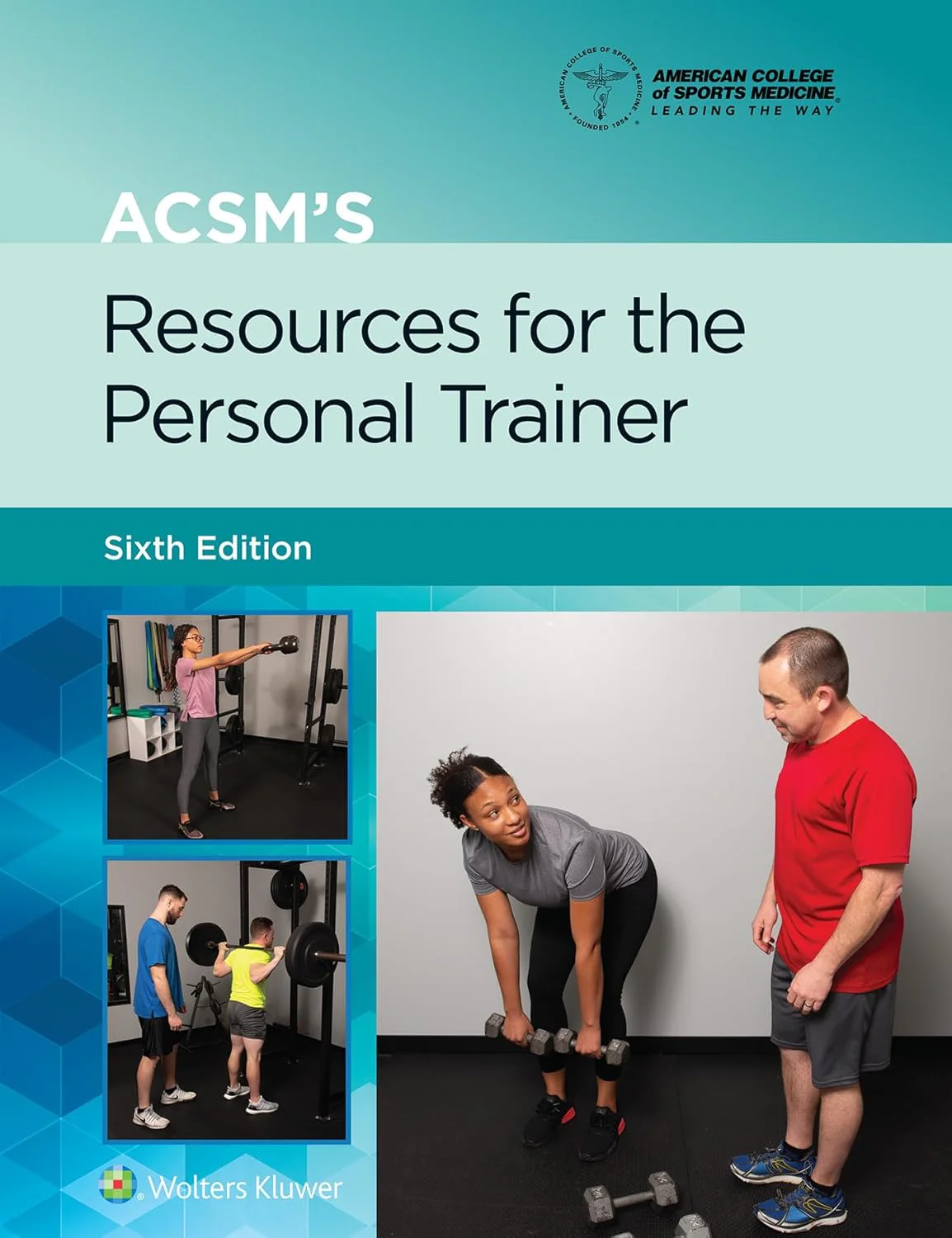
ACSM's Resources for the Personal Trainer serves as the cornerstone resource for exam preparation and professional development. This comprehensive textbook provides the scientific foundation and practical application knowledge necessary for both exam success and competent practice as a personal trainer .
The textbook aligns directly with the exam content outline and covers critical topics including:
Human anatomy and exercise physiology principles relevant to personal training
Health and fitness assessment techniques for various populations
Exercise programming for cardiorespiratory, muscular, and flexibility training
Behavioral strategies to enhance client motivation and adherence
Legal and professional guidelines governing personal training practice
What sets the ACSM approach apart is its strong emphasis on evidence-based practice and scientific principles. The textbook teaches trainers to make programming decisions based on research rather than tradition or anecdote, which is reflected throughout the certification exam .
When studying the textbook, pay particular attention to:
Assessment protocols and their appropriate applications for different populations
Exercise prescription guidelines for special populations (those with chronic conditions)
Behavioral coaching techniques grounded in established theories
Risk factor identification and management strategies
Proven Study Strategies for the ACSM CPT Exam
A strategic approach to studying significantly increases your likelihood of success on the ACSM CPT exam. Here are several evidence-based methods to optimize your preparation:
Create a Domain-Weighted Study Plan: Allocate your study time according to the exam domain weightings. Since Domain II (Exercise Programming) represents 45% of the exam, it should receive nearly half of your study attention . Develop a schedule that covers all content areas while emphasizing higher-weighted domains.
Master Different Cognitive Levels: The ACSM exam tests three cognitive levels . Create study activities that address each level:
For recall: Use flashcards for key terms and definitions
For application: Develop case studies requiring you to apply principles to specific client scenarios
For synthesis: Practice analyzing complex client situations and evaluating multiple potential solutions
Leverage Practice Tests Strategically: Take a free mock test early in your preparation to identify knowledge gaps . As you study, take additional practice exams to track your progress. Focus on understanding why you got questions wrong, not just on your score. Research indicates that candidates who take multiple practice tests significantly increase their pass rates .
Form or Join a Study Group: ACSM offers an official Facebook study group where candidates can share insights, ask questions, and learn from others' preparation strategies . Collaborative learning can help reinforce concepts and provide motivation.
Simulate Exam Conditions: As your test date approaches, take full-length practice tests under timed conditions that mirror the actual exam environment. This builds the mental stamina and time management skills needed for the 2.5-hour testing period .
Test Your Knowledge with a 45-Question ACSM CPT Practice Test
To help you gauge your readiness, we have created a comprehensive free mock test featuring 45 free questions designed to reflect the content, style, and cognitive levels of the actual ACSM CPT exam. This free questionnaire covers all four domains, with particular emphasis on the higher-weighted areas, providing a robust snapshot of your current knowledge and preparation needs.
This practice test will help you:
Experience the scenario-based question formats used extensively on the ACSM exam
Identify specific content areas where you need further review and study
Practice applying scientific principles to realistic client situations
Develop effective time management strategies for the actual exam
Use your results to refine your study plan and focus your efforts on domains where you need the most improvement. Pay particular attention to questions related to Domain II (Exercise Programming), as this section comprises nearly half of the exam content .
Frequently Asked Questions
- How difficult is the ACSM CPT exam, and what is the pass rate?
The ACSM CPT exam is considered challenging, with a first-time pass rate of approximately 54% as of 2023 . The exam demands strong critical thinking skills and the ability to apply scientific principles to practical training situations. Proper preparation using the official textbook and practice tests is essential for success.
- What makes the ACSM CPT different from other personal trainer certifications?
The ACSM CPT certification is distinguished by its strong emphasis on scientific principles and evidence-based practice . ACSM personal trainers are particularly skilled in working with special populations and clients with health challenges, given the organization's medical and scientific foundation.
- Is "ACSM's Resources for the Personal Trainer" textbook required for the exam?
While not strictly mandatory, ACSM's Resources for the Personal Trainer is the official textbook for the exam and is specifically designed to cover all content areas you will be tested on . Using this resource ensures you are studying the most relevant and up-to-date information aligned with the exam objectives.
- What happens if I don't pass the ACSM CPT exam on my first attempt?
If you do not pass, you can retake the exam after a mandatory 15-day waiting period . The retest fee is $205 . It's recommended to use this waiting period to focus on your weak areas identified on your score report before attempting the exam again.
- Are there any upcoming changes to the ACSM CPT exam?
Effective July 10, 2025, ACSM certification exams will align with the 12th edition of the Guidelines for Exercise Testing and Prescription (GETP) . Additionally, starting in 2027, all ACSM certifications will require first aid training in addition to CPR/AED certification .

ACSM's Resources for the Personal Trainer
by American College of Sports Medicine (ACSM)
An essential resource to prepare for the ACSM Certified Personal Trainer examination, ACSM’s Resources for the Personal Trainer, 6th Edition, provides critical insights for Certified Personal Trainer candidates looking to boost their exam confidence, as well as practicing Personal Trainers who want to take their practice to the next level. This updated edition is fully aligned with the eleventh edition of ACSM’s Guidelines for Exercise Testing and Prescription and equips readers with the latest practices in client screening, exercise program development, and working with special populations.
Test Your Knowledge
45 questions - ACSM-CPT
Instructions:
- • Answer all questions within the time limit
- • Questions will auto-advance after you select an answer
- • You can navigate between questions using the number buttons
- • Use the skip button if you're unsure
- • Review your answers before submitting
Comments (0)
Join the discussion! Share your thoughts and engage with other readers.
ACSM's Resources for the Personal Trainer
by American College of Sports Medicine (ACSM)
An essential resource to prepare for the ACSM Certified Personal Trainer examination, ACSM’s Resources for the Personal Trainer, 6th Edition, provides critical insights for Certified Personal Trainer candidates looking to boost their exam confidence, as well as practicing Personal Trainers who want to take their practice to the next level. This updated edition is fully aligned with the eleventh edition of ACSM’s Guidelines for Exercise Testing and Prescription and equips readers with the latest practices in client screening, exercise program development, and working with special populations.