More Than a Certification: It's a Philosophy
In a fitness industry saturated with quick-fix certifications and influencer-driven trends, the ACSM Certified Personal Trainer (ACSM CPT) credential stands apart. It's not just a test to pass; it's a commitment to a scientific, evidence-based approach to health and fitness. While other certifications may teach you what to do, ACSM empowers you to understand the why behind every exercise, assessment, and program you design.
This article isn't just another exam guide. It's a deep dive into why the ACSM CPT is the preferred credential for trainers who aspire to work with a diverse range of clients, including those with chronic conditions, and who seek respect in clinical, corporate, and high-performance settings. We'll explore the mindset of an ACSM professional and how the official textbook, ACSM's Resources for the Personal Trainer, serves as your scientific compass.
The ACSM Difference: A Comparative Look
What truly sets the ACSM-CPT apart is its foundation in clinical and exercise science. The table below contrasts its core philosophy with that of more generalized certifications.
Aspect | Standard Certifications | ACSM Certified Personal Trainer |
|---|---|---|
Foundation | General protocols, anecdotal methods | Evidence-based, scientific principles rooted in medicine |
Exam Focus | Memorization and recall | Application, analysis, and synthesis of knowledge in real-world scenarios |
Ideal Clientele | General healthy populations | Diverse clients, including those with controlled chronic diseases (e.g., hypertension, diabetes) |
Career Positioning | Freelance trainer, gym floor | Clinical settings, corporate wellness, specialized roles requiring a higher level of trust |
Deconstructing the "Thinker's Exam": It's Not What You Know, It's How You Think
The ACSM CPT exam is designed to test your ability to reason, not just recall. With 135 questions to be completed in 2.5 hours, the challenge isn't the volume—it's the complexity . The exam uses three progressive cognitive levels to evaluate your readiness:
Recall (Remembering Facts): This is the foundation. You'll need to recognize specific information, like the components of a health-history form or the steps in a risk stratification process .
Application (Using Knowledge): Here, you take those facts and apply them to new situations. For example, you might be given a client's assessment results and goals and asked to select the most appropriate initial exercise modality .
Synthesis (Analyzing and Creating Solutions): This is the highest level, where true professionals are separated from the rest. You'll be required to analyze complex client data, evaluate multiple potential solutions, and determine the best course of action .
Domain Spotlight: Where You'll Spend Your Time
The exam content is strategically weighted to emphasize the most critical aspects of professional training :
Exercise Programming and Implementation (45%): The largest domain by far, focusing on creating safe, effective, and individualized programs using the FITT-VP principles .
Initial Client Consultation and Assessment (25%): Stressing the importance of thorough screening, risk factor identification, and foundational fitness assessments .
Exercise Leadership and Client Education (20%): Focusing on motivational techniques, communication, and educating clients with scientifically sound information .
Legal and Professional Responsibilities (10%): Covering ethics, scope of practice, and risk management to protect both you and your clients .
Your Scientific Foundation: ACSM's Resources for the Personal Trainer
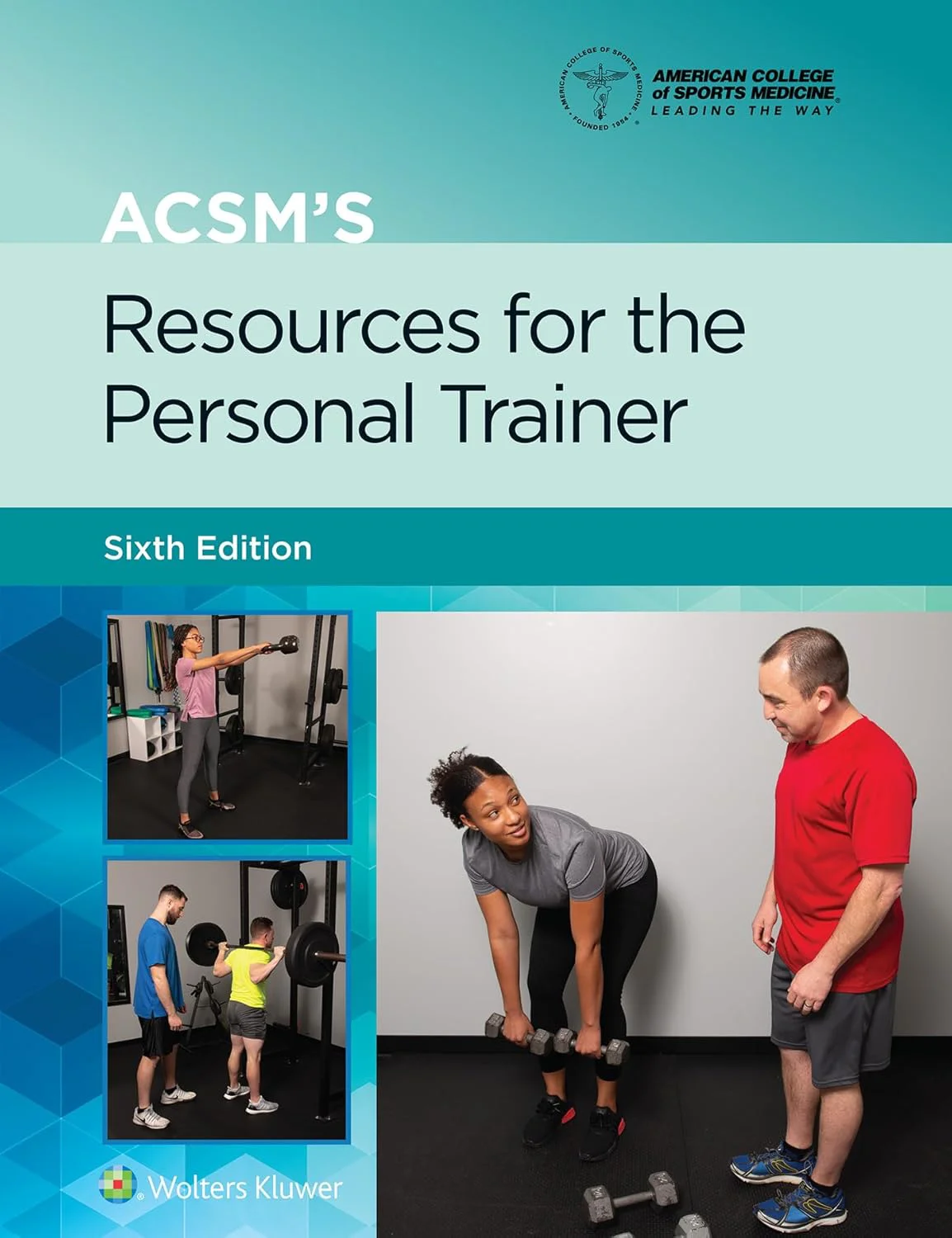
The ACSM's Resources for the Personal Trainer textbook is more than a study guide; it's the definitive resource that translates exercise science into practical application. This book is the cornerstone of the ACSM philosophy and your most valuable tool for exam preparation and professional practice.
Unlike generic manuals, this text provides a deep dive into:
Integrated Health Appraisals: Learning to use tools like the updated PAR-Q+ to identify risks and know when to seek medical clearance .
Exercise Prescription for Special Populations: Gaining the knowledge to responsibly work with clients who have conditions like type 2 diabetes, hypertension, and osteoporosis .
Behavioral Coaching Strategies: Moving beyond simple motivation to employ evidence-based techniques that foster long-term adherence .
A Glimpse into the ACSM Mindset: Sample Scenario
The ACSM exam is renowned for its scenario-based questions that test critical thinking. Let's see how you approach a typical challenge.
Scenario: Your new client is a 52-year-old man with a sedentary job. His goal is to "lose weight and get healthy." His health history form notes a family history of cardiovascular disease. During his initial assessment, his resting blood pressure is measured at 146/94 mmHg.
What is the most immediate and appropriate action for the personal trainer?
A) Begin a light cardio program to get him started on his weight loss goal.
B) Design a full-body resistance training program focused on compound movements.
C) Have him obtain medical clearance from a physician before starting any exercise program.
D) Provide him with nutritional guidelines to reduce sodium intake.
The Correct Answer is C.
A blood pressure reading at or above 140/90 mmHg is classified as Stage 1 Hypertension and is a major risk factor for cardiovascular disease . Given this reading and his family history, the most responsible and safe action is to get medical clearance. This ensures it is safe for the client to exercise and is a core part of the ACSM risk management standards .
Why the Other Answers Are Incorrect:
A & B involve initiating an exercise program without first addressing a significant health risk. This falls outside a trainer's scope of practice and could be dangerous.
D While nutrition is important for his goals, it does not address the immediate need for medical evaluation before exercise.
Preparing for the ACSM-CPT: A Strategy for Success
Passing the ACSM exam requires a shift from studying to understanding. Here’s how to prepare effectively:
Embrace the Official Textbook: Use ACSM's Resources for the Personal Trainer as your primary guide. Don't just read it—interact with it. Create case studies for yourself and design programs based on the concepts you learn .
Practice with Purpose: Use a free mock test early to diagnose your weaknesses. As you study, focus on application and synthesis-level questions. Review every incorrect answer until you understand the underlying principle, not just the fact .
Join the Community: ACSM offers an official Facebook study group where you can learn from other candidates, ask questions, and gain insights from those who have successfully passed the exam .
Simulate the Real Experience: As your test date nears, take a full-length, timed practice exam. This builds the mental stamina needed for the 2.5-hour testing period and helps you practice pacing .
Test Your Critical Thinking with 45 Free Questions
Ready to experience the ACSM challenge? We have created a comprehensive free mock test with 45 free questions designed to mirror the style and cognitive demand of the actual exam. This free questionnaire will help you:
Identify if your current knowledge is at the recall, application, or synthesis level.
Experience the complex, multi-step reasoning required for success.
Build confidence in your problem-solving abilities before exam day.
Use your results to strategically refine your study plan and focus on thinking, not just memorizing.
Frequently Asked Questions
- What are the eligibility requirements for the ACSM CPT exam?
You must be at least 18 years old, hold a high school diploma or equivalent (like a GED), and have a current adult CPR/AED certification. Starting in 2027, first aid training will also be required.
- How is the ACSM CPT exam scored, and what is the pass rate?
The exam uses a scaled scoring system from 200 to 800, with a passing score of 550 . While official pass rates are not always published, it is considered a challenging exam, making thorough preparation essential.
- Is the "ACSM's Resources for the Personal Trainer" textbook mandatory?
While not strictly mandatory, it is the official textbook for the exam and is specifically designed to cover every topic you will be tested on . Given the exam's application-based nature, relying on this text is the most reliable way to ensure you are studying the correct, in-depth information.
- What makes the ACSM approach to personal training unique?
The ACSM CPT certification is distinguished by its strong emphasis on scientific principles and evidence-based practice . It is developed by the largest exercise science organization in the world, making it particularly respected in settings that require a high level of trust and clinical knowledge.
- What is the cost of the ACSM CPT exam?
The exam fee is $410 for non-members and $310 for ACSM members . The membership discount often makes joining ACSM a valuable investment, as it also provides access to additional resources and networking opportunities.

ACSM's Resources for the Personal Trainer
by American College of Sports Medicine (ACSM)
An essential resource to prepare for the ACSM Certified Personal Trainer examination, ACSM’s Resources for the Personal Trainer, 6th Edition, provides critical insights for Certified Personal Trainer candidates looking to boost their exam confidence, as well as practicing Personal Trainers who want to take their practice to the next level. This updated edition is fully aligned with the eleventh edition of ACSM’s Guidelines for Exercise Testing and Prescription and equips readers with the latest practices in client screening, exercise program development, and working with special populations.
Test Your Knowledge
45 questions - ACSM-CPT
Instructions:
- • Answer all questions within the time limit
- • Questions will auto-advance after you select an answer
- • You can navigate between questions using the number buttons
- • Use the skip button if you're unsure
- • Review your answers before submitting
Comments (0)
Join the discussion! Share your thoughts and engage with other readers.
ACSM's Resources for the Personal Trainer
by American College of Sports Medicine (ACSM)
An essential resource to prepare for the ACSM Certified Personal Trainer examination, ACSM’s Resources for the Personal Trainer, 6th Edition, provides critical insights for Certified Personal Trainer candidates looking to boost their exam confidence, as well as practicing Personal Trainers who want to take their practice to the next level. This updated edition is fully aligned with the eleventh edition of ACSM’s Guidelines for Exercise Testing and Prescription and equips readers with the latest practices in client screening, exercise program development, and working with special populations.